Because settings describe intention, not outcome. In electric ranges, sensors or elements often lose accuracy. In gas ranges, airflow or flame distribution quietly changes. The controls say one thing; the heat does another.
Yes, although it usually starts small. Delayed ignition stresses components and affects safety. What sounds like hesitation is often a sign that the igniter is nearing the end of its tolerance.
When temperature feedback drifts, timing follows. The range still functions, yet precision disappears. That’s usually a control or sensor issue rather than a complete failure.
Absolutely. The principles overlap, but the risks do not. Electric repairs focus on accuracy and control. Gas repairs prioritize ignition, airflow, and safety. Treating them the same leads to missed details.
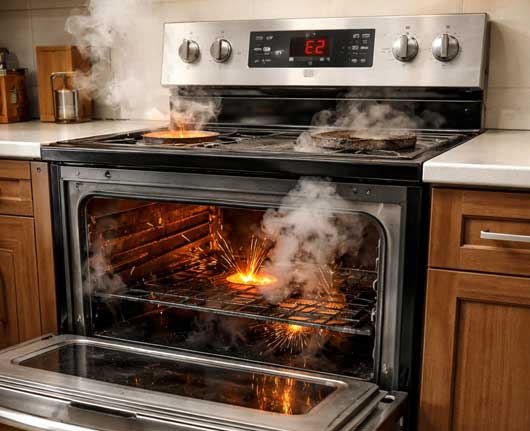
When ignition fails, overheating occurs, or safety feels uncertain. Emergency range repair isn’t about urgency for its own sake. It’s about restoring control before hesitation turns into risk.